
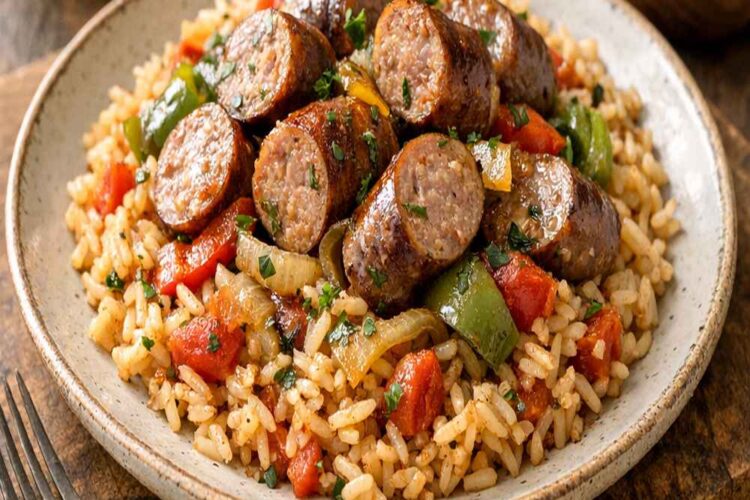
This dish looks and tastes like it costs forty dollars at a restaurant. The ingredients cost under ten dollars. I’m serious. When you serve this one-skillet wonder to your family, they won’t believe you made it at home for pocket change. The smoked sausage caramelizes beautifully. The rice absorbs all that incredible savory broth. The bell pepper adds bright color and nutrition. Every bite feels intentional and celebratory, even though you’ve spent less than most fast-casual meals. That’s the magic of smart cooking. If you love eating well without the restaurant price tag, you’ll also adore our BBQ Mac And Cheese Recipe, which delivers the same kind of impressive-yet-budget-friendly satisfaction.
Restaurant-Quality Brats And Rice Recipe for Under $10 (No Shortcuts on Flavor)
I grew up watching my mom stretch a grocery budget in ways that seemed like pure magic. She’d turn a few simple ingredients into meals that tasted like she’d spent hours in the kitchen. One of my favorite memories is watching her make a one-skillet sausage and rice dish on a Tuesday night when money was tight. She’d brown that sausage until it was deeply caramelized, and suddenly our whole kitchen smelled like a restaurant. My siblings and I would gather around the table, and for just a moment, we felt rich. That lesson stuck with me through all my years studying nutrition and culinary development. Food doesn’t have to be expensive to be nourishing or delicious. In fact, some of the most satisfying meals come from understanding how to layer flavors and textures on a real budget. This brats and rice recipe is my grown-up version of that Tuesday night magic. It’s the dish I make when I want to prove to myself and my family that abundance doesn’t require a big price tag.
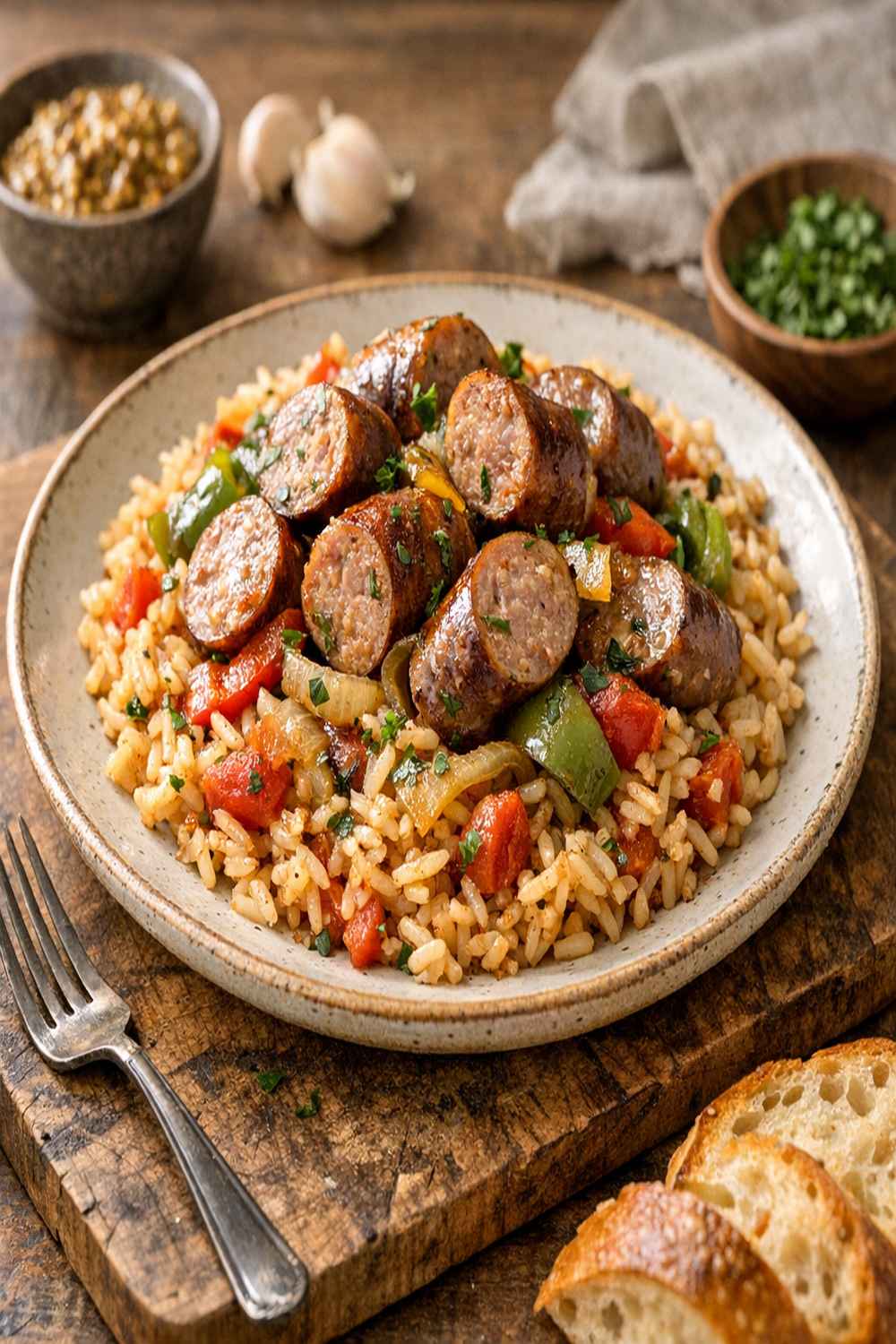
The Real Cost Breakdown
Let me show you exactly where your money goes with this recipe. I’ve tracked actual prices from Arkansas grocery stores, and I’m confident you can find these prices or better in your area. This recipe makes four generous servings, bringing the cost per serving to approximately two dollars and forty cents. Compare that to a restaurant sausage and rice bowl, which typically runs twelve to sixteen dollars before tax and tip. You’re looking at saving nearly eighty percent per meal.
- Smoked sausage – approximately three dollars and fifty cents (buy from the meat counter at Walmart or local butchers; often cheaper than packaged options)
- Long grain white rice – sixty cents (bulk section is cheaper than boxes; store brands work beautifully)
- Fire-roasted diced tomatoes – one dollar and thirty cents (one fifteen-ounce can; generic brands taste identical to premium)
- Chicken broth – twenty cents (one-half cup from a carton or homemade; the liquid carries flavor, not cost)
- Bell pepper – eighty-nine cents (orange or red peppers cost slightly more but add visual pop; green is the budget choice)
- Cooking oil – four cents (any neutral oil works; buy large bottles to lower per-use cost)
- Smoked paprika – ten cents (this is where flavor lives; buy from the bulk spice section)
- Dried oregano, thyme, garlic powder, onion powder, cayenne, black pepper – sixteen cents combined (buy as a spice bundle or from bulk sections)
- Fresh green onions – twenty cents (the garnish that makes it look restaurant-quality)
Total recipe cost: nine dollars and ninety-nine cents for four servings, or two dollars and fifty cents per serving.
Smart Shopping Tips for This Recipe
- Buy smoked sausage from the butcher counter, not the packaged meat section – Walmart and Kroger often have better prices at the counter, and you can buy exactly the amount you need. Ask the butcher if they have any daily specials or bulk discounts.
- Stock your spice cabinet from bulk sections – Whole Foods, local co-ops, and many conventional grocers now have bulk spice sections. You pay by weight and spend pennies instead of dollars. Smoked paprika especially becomes affordable when bought this way.
- Choose store-brand canned tomatoes without hesitation – Fire-roasted tomatoes are a flavor category, not a quality marker. Generic and premium taste nearly identical. The savings here is real and the quality is not compromised.
- Buy rice from bulk bins if possible – Long grain white rice is inexpensive anyway, but bulk bins offer slightly lower prices and zero packaging waste. Store brands in boxes work fine too.
- Plan this recipe around produce sales – Bell peppers fluctuate seasonally. When they’re on sale, buy extra and freeze them diced in freezer bags. They work beautifully in this dish and you’ve locked in the lower price.
The Ingredients
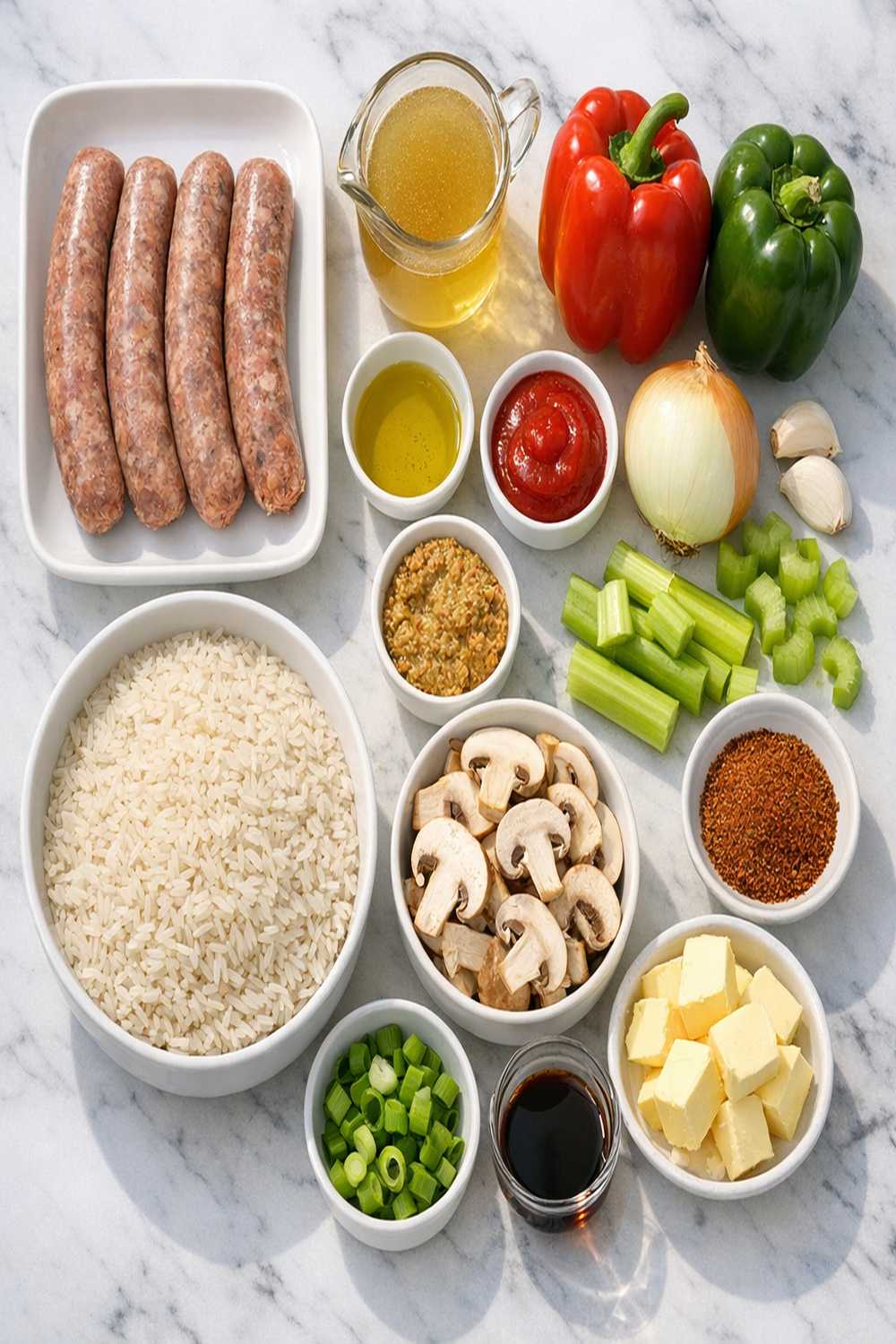
Every ingredient in this recipe earns its place and its cost. There are no fillers here. The smoked sausage brings protein and that smoky depth that makes people ask what restaurant you ordered from. The rice becomes the canvas for all that flavor. The spices transform ordinary into extraordinary. The tomatoes add acidity and brightness. I’ve chosen each element because it contributes something you can actually taste.
- ¼ teaspoon garlic powder (concentrated garlic flavor without moisture)
- 1 cup long grain white rice (uncooked; measure carefully for perfect texture)
- 1 tablespoon neutral cooking oil (vegetable, canola, or light olive oil all work)
- ½ teaspoon dried thyme (adds subtle earthiness)
- 1 bell pepper (any color; red and orange are sweeter, green is more herbaceous)
- 14 ounces smoked sausage (sliced into half-inch rounds for even browning)
- 15 ounces fire-roasted diced tomatoes (one standard can, including all juices)
- 1½ cups chicken broth (use low-sodium if you prefer controlling salt)
- ¼ teaspoon onion powder (rounds out the savory profile)
- 1 teaspoon smoked paprika (this is the flavor anchor; don’t skip it)
- 2 green onions (sliced thin for garnish; adds fresh color and mild onion flavor)
- ⅛ teaspoon freshly cracked black pepper (freshly ground tastes noticeably better)
- ½ teaspoon salt (adjust at the end based on your broth’s sodium content)
- ⅛ teaspoon cayenne pepper (optional heat; adjust to your family’s preference)
- ½ teaspoon dried oregano (Mediterranean herb that builds depth)
Yield: Four generous servings
How to Make Brats And Rice Recipe Without Breaking the Bank
This is smart cooking, not compromise cooking. Every technique I’m sharing with you has a reason rooted in flavor development and nutrition. When you understand the why, you can cook with confidence. Let’s build this meal together.
Step 1: Brown Your Sausage Until It’s Deeply Caramelized
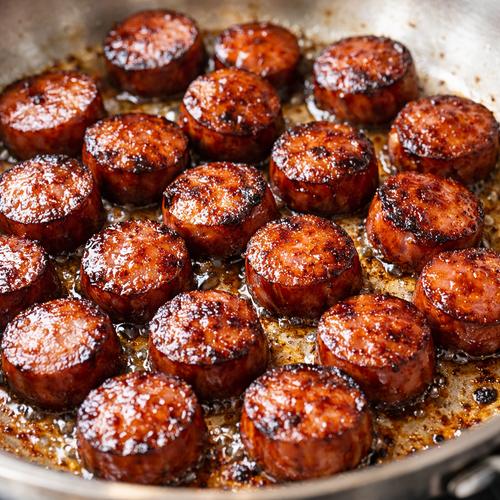
Slice your smoked sausage into half-inch thick rounds. This thickness is important because it creates maximum surface area for browning without breaking apart during cooking. Heat your cooking oil in a deep skillet or Dutch oven over medium heat until it shimmers slightly. Add the sausage rounds and let them sit undisturbed for two to three minutes. This is called searing, and it’s where all the flavor magic begins. Don’t stir constantly. Let the meat develop a golden-brown crust. Once you see that color, stir and continue cooking until most pieces have that beautiful caramelization. The brown bits that stick to the bottom of your skillet aren’t burnt; they’re liquid gold flavor that will infuse into your rice. This process takes about five to seven minutes total and costs literally nothing extra, but it transforms the entire dish.
Step 2: Add Your Bell Pepper and Keep the Heat at Medium
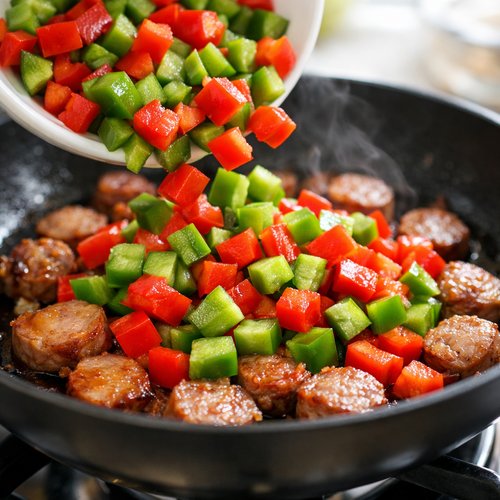
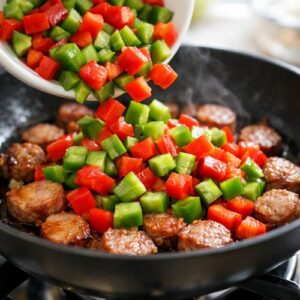
While your sausage is browning, dice your bell pepper into bite-sized pieces. Aim for roughly half-inch cubes so they cook evenly and stay slightly tender with a bit of bite. Once your sausage is deeply browned, add the bell pepper directly to the skillet and stir. Continue cooking for about one minute. You want the pepper to start softening and releasing its natural sugars, but not to cook completely. This timing is crucial because the pepper will continue cooking in the broth later. Medium heat is your friend here; it prevents burning and allows flavors to develop gently.
Step 3: Toast Your Spices to Wake Up Their Flavors
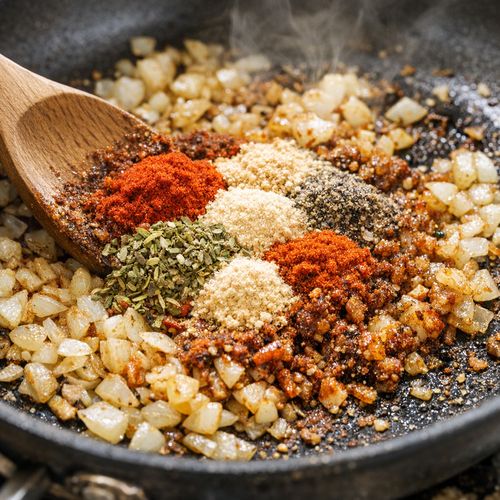
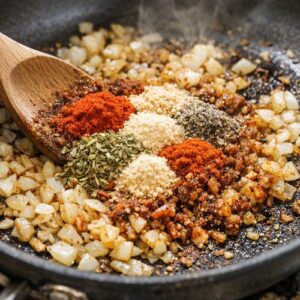
Now add all your spices to the skillet: smoked paprika, oregano, thyme, garlic powder, onion powder, cayenne, and black pepper. Stir everything together and cook for exactly one minute over medium heat. This step is called blooming, and it’s one of the most important techniques in cooking. Heat releases the aromatic compounds in spices, making them more flavorful and complex. You’ll actually smell the difference in the room. You’ll notice how the aroma changes from raw spice to something warm and inviting. This one minute of toasting means you need less spice to achieve more flavor, which saves money and improves taste simultaneously.
Step 4: Add Tomatoes, Rice, and Broth, Then Dissolve the Flavorful Browned Bits
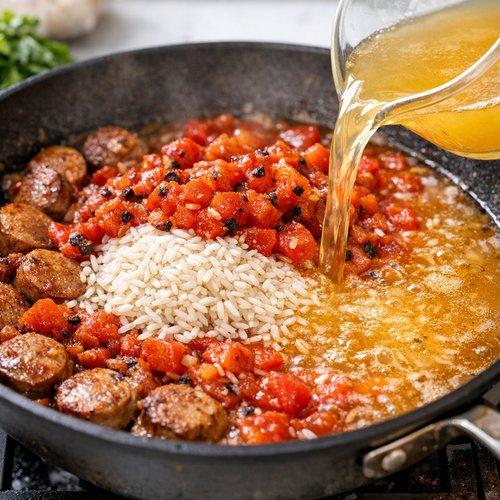
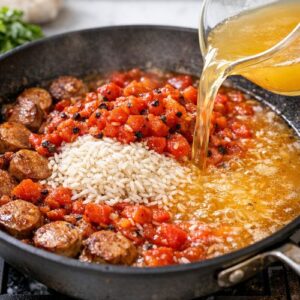
Add your can of fire-roasted diced tomatoes with all their juices, the uncooked rice, and the chicken broth to the skillet. Here’s a professional tip: use a wooden spoon to scrape the bottom of the skillet gently while stirring. You’re releasing all those caramelized sausage bits that stuck to the pan. This process is called deglazing, and it adds incredible depth to your broth. Stir until everything is combined and the rice is coated with liquid. The mixture should look wet and loose at this stage. That’s exactly right. Don’t worry if it looks soupy; the rice will absorb the liquid as it cooks.
Step 5: Cover and Bring to a Boil, Then Reduce to Low Heat
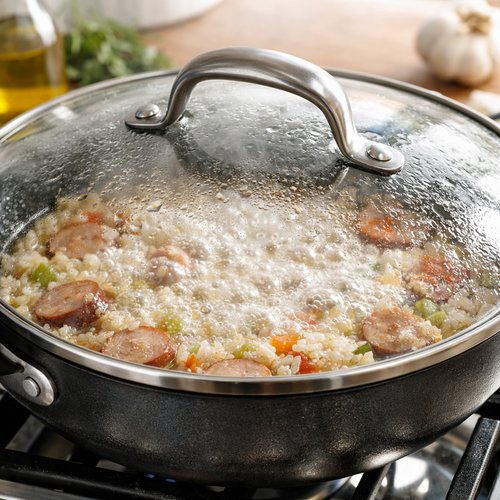
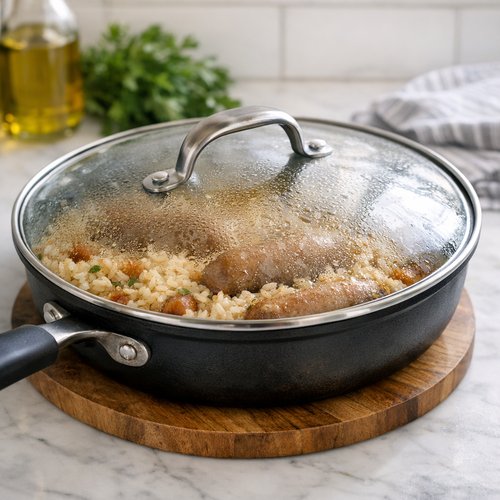
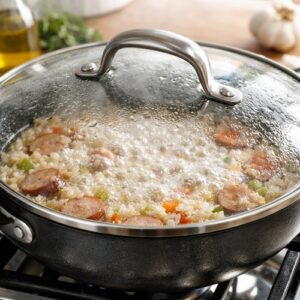
Place a lid on your skillet and turn the heat up to medium-high. You’re waiting for the broth to reach a full boil. This usually takes four to six minutes. Once you see steam escaping and hear the gentle bubbling, immediately turn the heat down to low. This step is critical. High heat at this stage will scorch the bottom of your rice and create a gluey texture. Low heat allows the rice to cook evenly and absorb the liquid gently. Set a timer for twenty minutes and resist the urge to lift the lid and stir. Lifting the lid releases steam, which disrupts the cooking process.
Step 6: Rest Your Skillet Off Heat for Perfect Texture
When your timer reaches twenty minutes, remove the skillet from the heat. Do not remove the lid. Let it rest with the cover on for an additional five minutes. This resting period is where the last bit of magic happens. The residual heat finishes cooking the rice gently, and any remaining liquid gets absorbed evenly. The rice grains will be tender and distinct, not mushy or clumpy. Professional cooks use this technique all the time, and it costs nothing.
Step 7: Fold and Garnish for a Restaurant-Quality Finish
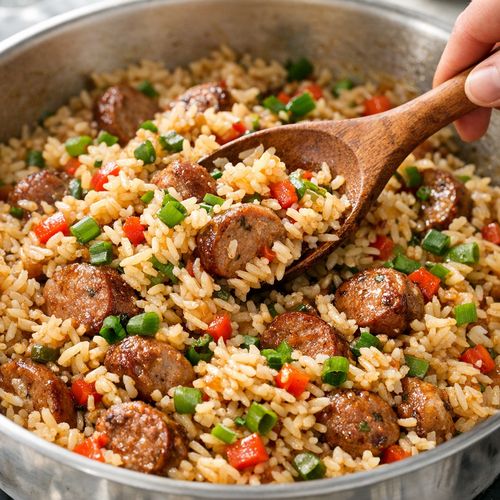
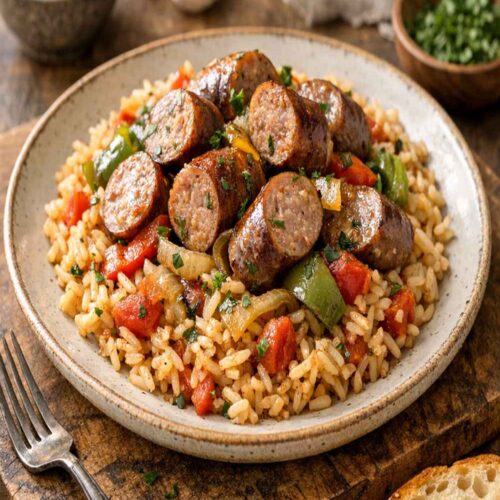
Remove the lid carefully (the steam will be hot). Use a fork or a wooden spoon to gently fold the rice and sausage together. This redistribution ensures every bite gets sausage and seasoning. Top with your sliced green onions. Those green onions are the detail that makes people think you spent hours on this dish. They add brightness, color, and a fresh onion flavor that cuts through the richness. Serve immediately while the skillet is still warm. This dish is best eaten fresh, but it stores beautifully for leftovers.
Expert’s Nutritional Tip
As a registered dietitian, I want to highlight something important about this meal. The combination of smoked sausage protein with the rice creates a complete amino acid profile, meaning your body gets all nine essential amino acids from this single dish. The fiber in the tomatoes and the vitamins in the bell pepper boost the nutritional density significantly. You’re not just eating a budget-friendly meal; you’re eating nutrition-dense food. The smoked paprika contains capsaicin, a compound with anti-inflammatory properties. The garlic and onion powders provide organosulfur compounds that support heart health. This is nourishing food that happens to be inexpensive. That’s the best kind of meal.
Make-Ahead Guide for Maximum Convenience
This recipe is perfect for meal prep because it reheats beautifully and actually tastes better after a day of flavors melding together. Prep the night before: slice your sausage, dice your bell pepper, and measure your spices into a small bowl. Store the sausage and pepper in separate containers in the refrigerator. The spice mixture can stay in a small cup at room temperature. In the morning, you can have this dish ready to eat in less than thirty minutes. Make a full batch on Sunday: divide into four airtight containers and refrigerate. This meal lasts four to five days in the refrigerator. Reheat gently in a skillet over medium heat with a splash of broth to restore moisture. You can also freeze portions for up to three months. Thaw in the refrigerator overnight before reheating. This strategy means you’re making dinner once and eating well for nearly a week. The time savings alone makes this recipe invaluable for busy families.
Common Mistakes to Avoid
- Stirring constantly while the rice cooks: This breaks down the rice grains and releases excess starch, creating a gluey texture. Trust the process. The lid stays on, and the heat stays low. You’ve got this.
- Using a ratio of too much liquid: The one-and-a-half cups of broth for one cup of rice is precise. More liquid creates mushy rice. Less liquid leaves hard grains. Measure carefully. This is one place where precision matters.
- Skipping the resting period: I know it’s tempting to dig in immediately, but that five-minute rest is when the rice finishes cooking perfectly. The residual heat is your friend.
- Not browning the sausage thoroughly enough: That caramelization is flavor. Don’t rush it. Give those sausage rounds time to develop color. It takes slightly longer, but the depth you build is worth every second.
How to Stretch This Recipe Further
- Feed six instead of four by adding another half cup of rice and three-quarters cup of broth. The sausage amount stays the same, so the cost per serving drops even lower. You can also add extra vegetables like frozen peas, corn, or diced zucchini without changing the cooking time significantly.
- Transform leftovers into a burrito filling or stuffed peppers. Take your leftover brats and rice, mix in a bit of shredded cheese and salsa, and you’ve got a completely different meal. This turns one meal into two different meals from a single cooking effort.
- Freeze portions strategically by dividing into meal-sized containers before refrigerating. When you freeze in four-cup portions, you’ve got grab-and-go meals ready whenever you need them. This is the definition of make-ahead cooking. You’re essentially paying your past self to make your future self’s dinner.
- Add protein-rich toppings without much additional cost. Top with a fried egg, some crumbled queso fresco, or a dollop of Greek yogurt mixed with lime juice. These additions transform the meal while costing less than a dollar each.
Budget Substitutions That Don’t Sacrifice Quality
- Smoked sausage → Polish kielbasa or regular beef sausage: Both are often cheaper and cook identically. The flavor is slightly different but equally delicious. Polish kielbasa is often under three dollars and adds wonderful smoky notes.
- Fire-roasted diced tomatoes → Regular diced tomatoes: The “fire-roasted” label is marketing. Regular canned tomatoes work beautifully and cost slightly less. The smoked paprika you’re already using creates that roasted depth anyway.
- Fresh bell pepper → Frozen bell pepper dices: When fresh peppers are expensive, frozen diced bell peppers are often half the price and work identically in this dish. They’re picked and frozen at peak ripeness, so nutrition is preserved.
- Chicken broth → Vegetable broth or homemade broth: Either works perfectly. If you save vegetable scraps in the freezer, you can make your own broth for nearly free. Even store-brand vegetable broth is slightly cheaper than chicken.
Seasonal Variations to Keep This Recipe Fresh Year-Round
Spring: Add fresh spring peas or asparagus pieces during the last five minutes of cooking. Use fresh tarragon instead of thyme for a bright, herbaceous flavor that celebrates spring greens. Fresh green onions become abundant and inexpensive in spring.
Summer: Dice zucchini instead of just bell pepper. Add fresh basil as a garnish instead of only green onions. Summer sausage options expand at farmers markets, so you might find interesting varieties at great prices.
Fall: Incorporate diced sweet potato or regular potato chunks. Use smoked sausage from fall farmers markets. Add smoked paprika and cayenne for warmth and depth that feels seasonal and cozy.
Winter: Add frozen corn or peas. Stick with the classic red or orange bell pepper, which is hearty and warming. This is the most forgiving season for budget shopping because most vegetables are stored and inexpensive.
Can I Store Brats And Rice Recipe?
Absolutely. Proper storage is part of smart cooking because it prevents waste, and preventing waste is how you stretch a budget. In the refrigerator: store this dish in an airtight container for four to five days. The flavors actually deepen over a day as everything melds together. Reheat gently in a skillet over medium heat with a tablespoon of broth to restore moisture. Microwaving works, but skillet reheating tastes better because the rice stays separate and tender rather than becoming tough.
In the freezer: divide into meal-sized portions in freezer-safe containers. Label with the date. This dish freezes beautifully for up to three months. Thaw in the refrigerator overnight before reheating. You’re essentially building your own freezer meals at a fraction of the cost of commercial frozen meals. This is the definition of abundance thinking on a budget.
Important note about the green onion garnish: add fresh green onions after reheating, not before storing. They become watery and unpleasant after days in the refrigerator. This small detail makes the difference between leftover that tastes fresh and leftover that feels sad.
Nutrition Information
Per serving (based on four equal servings): approximately four hundred eighty calories, twenty-two grams of protein, forty-eight grams of carbohydrates, sixteen grams of fat, and four grams of fiber. According to USDA nutritional data, this meal provides significant amounts of B vitamins from the sausage and rice, vitamin C from the bell pepper, and lycopene from the tomatoes. The combination of protein and carbohydrate provides sustained energy. The fiber supports digestive health. You’re getting restaurant-quality taste and legitimate nutrition for less than three dollars. That’s not just budget-friendly; that’s exceptional value.
What Can I Serve With Brats And Rice Recipe?
This dish is fairly complete on its own, but complementary sides can round out the meal beautifully. Consider pairing with something cool and fresh to balance the warm spices, or something slightly rich to celebrate the occasion.
- Simple green salad with vinaigrette – costs under two dollars and adds brightness and fiber. The acid in the dressing cuts through the richness of the sausage.
- Cornbread or simple biscuits – excellent for soaking up extra broth. One batch of cornbread costs around one dollar and feeds the whole family.
- Steamed or roasted vegetables – frozen broccoli or green beans are inexpensive year-round. Toss with a tiny bit of oil and you’ve got a vegetable side for under fifty cents.
- Sliced fresh tomato salad with basil – if tomatoes are in season, this is incredibly inexpensive and adds brightness. In winter, skip this and stick with the canned tomatoes already in the dish.
- Our Baked Golden Potato Recipe – creates a heartier meal if you’re feeding teenagers or very active people. The potatoes are usually inexpensive and add substance without adding much cost.
Brats And Rice Recipe

Ingredients
- ¼ teaspoon garlic powder concentrated garlic flavor without moisture
- 1 cup long grain white rice uncooked; measure carefully for perfect texture
- 1 tablespoon neutral cooking oil vegetable, canola, or light olive oil all work
- ½ teaspoon dried thyme adds subtle earthiness
- 1 bell pepper any color; red and orange are sweeter, green is more herbaceous
- 14 ounce smoked sausage sliced into half-inch rounds for even browning
- 15 ounce fire-roasted diced tomatoes one standard can, including all juices
- 1½ cup chicken broth use low-sodium if you prefer controlling salt
- ¼ teaspoon onion powder rounds out the savory profile
- 1 teaspoon smoked paprika this is the flavor anchor; don't skip it
- 2 green onions sliced thin for garnish; adds fresh color and mild onion flavor
- ⅛ teaspoon freshly cracked black pepper freshly ground tastes noticeably better
- ½ teaspoon salt adjust at the end based on your broth's sodium content
- ⅛ teaspoon cayenne pepper optional heat; adjust to your family's preference
- ½ teaspoon dried oregano Mediterranean herb that builds depth
Instructions
Step 1: Brown Your Sausage Until It's Deeply Caramelized
- Slice your smoked sausage into half-inch thick rounds. This thickness is important because it creates maximum surface area for browning without breaking apart during cooking. Heat your cooking oil in a deep skillet or Dutch oven over medium heat until it shimmers slightly. Add the sausage rounds and let them sit undisturbed for two to three minutes. This is called searing, and it's where all the flavor magic begins. Don't stir constantly. Let the meat develop a golden-brown crust. Once you see that color, stir and continue cooking until most pieces have that beautiful caramelization. The brown bits that stick to the bottom of your skillet aren't burnt; they're liquid gold flavor that will infuse into your rice. This process takes about five to seven minutes total and costs literally nothing extra, but it transforms the entire dish.
Step 2: Add Your Bell Pepper and Keep the Heat at Medium
- While your sausage is browning, dice your bell pepper into bite-sized pieces. Aim for roughly half-inch cubes so they cook evenly and stay slightly tender with a bit of bite. Once your sausage is deeply browned, add the bell pepper directly to the skillet and stir. Continue cooking for about one minute. You want the pepper to start softening and releasing its natural sugars, but not to cook completely. This timing is crucial because the pepper will continue cooking in the broth later. Medium heat is your friend here; it prevents burning and allows flavors to develop gently.
Step 3: Toast Your Spices to Wake Up Their Flavors
- Now add all your spices to the skillet: smoked paprika, oregano, thyme, garlic powder, onion powder, cayenne, and black pepper. Stir everything together and cook for exactly one minute over medium heat. This step is called blooming, and it's one of the most important techniques in cooking. Heat releases the aromatic compounds in spices, making them more flavorful and complex. You'll actually smell the difference in the room. You'll notice how the aroma changes from raw spice to something warm and inviting. This one minute of toasting means you need less spice to achieve more flavor, which saves money and improves taste simultaneously.
Step 4: Add Tomatoes, Rice, and Broth, Then Dissolve the Flavorful Browned Bits
- Add your can of fire-roasted diced tomatoes with all their juices, the uncooked rice, and the chicken broth to the skillet. Here's a professional tip: use a wooden spoon to scrape the bottom of the skillet gently while stirring. You're releasing all those caramelized sausage bits that stuck to the pan. This process is called deglazing, and it adds incredible depth to your broth. Stir until everything is combined and the rice is coated with liquid. The mixture should look wet and loose at this stage. That's exactly right. Don't worry if it looks soupy; the rice will absorb the liquid as it cooks.
Step 5: Cover and Bring to a Boil, Then Reduce to Low Heat
- Place a lid on your skillet and turn the heat up to medium-high. You're waiting for the broth to reach a full boil. This usually takes four to six minutes. Once you see steam escaping and hear the gentle bubbling, immediately turn the heat down to low. This step is critical. High heat at this stage will scorch the bottom of your rice and create a gluey texture. Low heat allows the rice to cook evenly and absorb the liquid gently. Set a timer for twenty minutes and resist the urge to lift the lid and stir. Lifting the lid releases steam, which disrupts the cooking process.
Step 6: Rest Your Skillet Off Heat for Perfect Texture
- When your timer reaches twenty minutes, remove the skillet from the heat. Do not remove the lid. Let it rest with the cover on for an additional five minutes. This resting period is where the last bit of magic happens. The residual heat finishes cooking the rice gently, and any remaining liquid gets absorbed evenly. The rice grains will be tender and distinct, not mushy or clumpy. Professional cooks use this technique all the time, and it costs nothing.
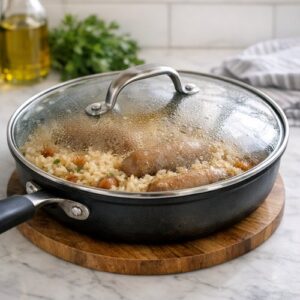
Step 7: Fold and Garnish for a Restaurant-Quality Finish
- Remove the lid carefully (the steam will be hot). Use a fork or a wooden spoon to gently fold the rice and sausage together. This redistribution ensures every bite gets sausage and seasoning. Top with your sliced green onions. Those green onions are the detail that makes people think you spent hours on this dish. They add brightness, color, and a fresh onion flavor that cuts through the richness. Serve immediately while the skillet is still warm. This dish is best eaten fresh, but it stores beautifully for leftovers.

Notes
Nutrition
FAQs
Can I use brown rice instead of white rice?
Yes, but adjust your cooking time. Brown rice requires approximately forty minutes instead of twenty. You may also need slightly more broth because brown rice absorbs more liquid. The flavor is nuttier and earthier, which pairs beautifully with the smoked sausage. The nutrition profile is slightly higher in fiber. The cost is nearly identical, so choose based on your family’s preference.
What if I don’t have smoked paprika?
Regular paprika works, but you’ll lose some of that smoky depth. Add a pinch of liquid smoke (about an eighth of a teaspoon) to compensate. Alternatively, use an extra half teaspoon of oregano or thyme. The dish won’t taste identical, but it will still be delicious. This is exactly where budget cooking teaches you flexibility.
Is this recipe spicy?
The cayenne pepper adds only subtle heat. The eighth teaspoon amount is mild enough for most families, including kids. If you prefer no heat, simply omit the cayenne. If you want more heat, increase to a quarter teaspoon. Taste as you go. Heat preference is personal, and your recipe should match your family’s palate.
Can I make this in a slow cooker or Instant Pot?
Yes to Instant Pot, with modifications. Brown the sausage in the sauté setting, then add all other ingredients. Cook on high pressure for half the normal rice cooking time (approximately ten minutes). Natural release for ten minutes. The results are slightly different in texture, but still delicious and convenient. For slow cooker, the results are less consistent because you lose the browning step, which is flavor-critical. I recommend sticking with the stovetop method for best results.
How do I know when the rice is done?
The rice is done when all the liquid is absorbed and the grains are tender but not mushy. The best way to check is to taste a grain. It should be soft and chewy, not hard in the center. If you see liquid still in the bottom of the skillet after twenty minutes of cooking, give it another two minutes. Every stove is slightly different. You’re developing intuition here, which is the real skill of cooking well.
More Budget-Friendly Recipes
- Barbeque Chicken Wrap Recipe – quick assembly, big flavors, costs under six dollars for a family meal
- Balsamic Caprese Chicken Recipe – elegant and inexpensive, uses affordable chicken with simple, quality ingredients
- Asian Steak Bites Recipe – impressive enough for company but budget-friendly when you buy steak on sale
You just made a restaurant-quality meal for under three dollars per person. You proved to yourself that eating well doesn’t require a big grocery budget. You fed your family something genuinely delicious and nutritious. That’s the real win here. This is the kind of cooking that builds confidence and creates family memories. Next time someone tells you that healthy eating is expensive, you can point to this dish and say, “Actually, it’s not.” Keep making meals like this one. Keep choosing flavor and nutrition over expensive shortcuts. Keep believing that your family deserves abundance, no matter what your budget looks like. Happy cooking!
